
Minimizing AI Risks in Your Job Search
Incorporating AI into your job search is no longer just an advantage -- it’s becoming a necessity in an increasingly digital hiring landscape. From personalized job recommendations to optimized resumes and cover letters, AI-driven tools empower candidates to navigate the job market more effectively.
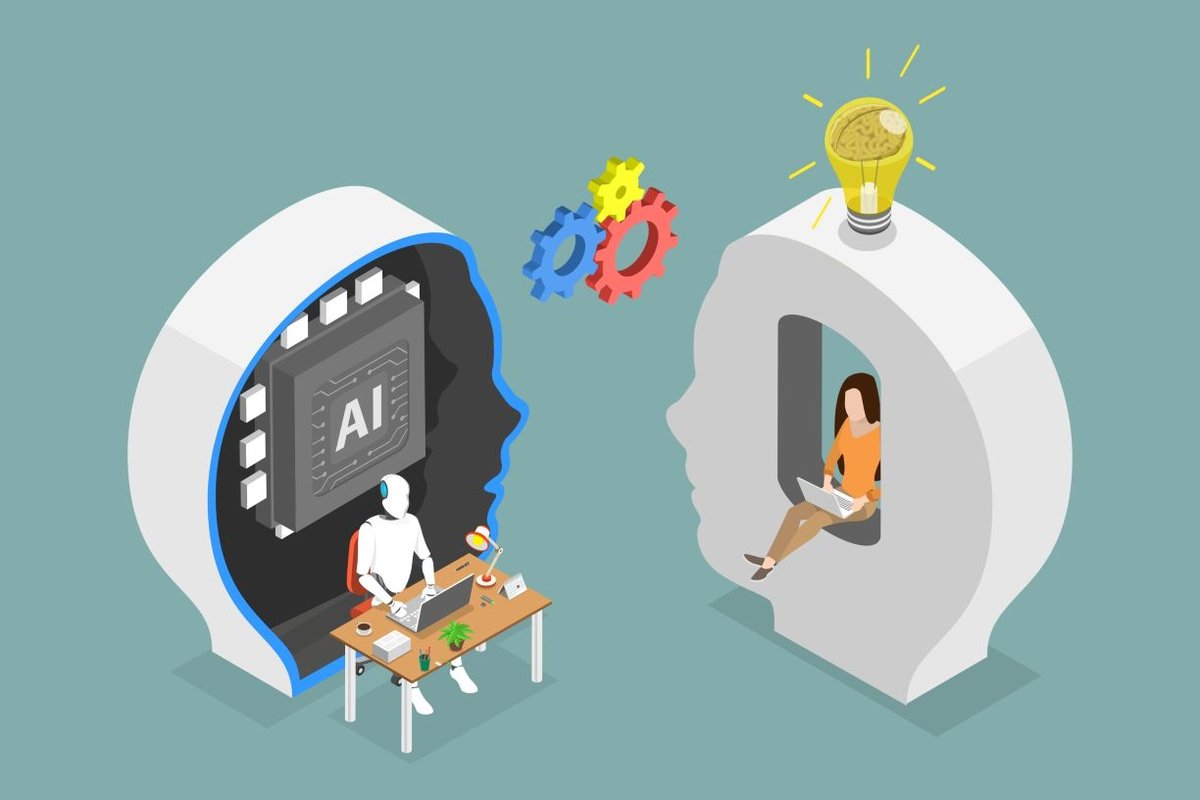
Chances are high that you are already using AI in your job search. While there are many advantages to using AI, there are some notable risks to be aware of in an increasingly AI-driven job market.
Do Not Skip the Human Part
While technology can streamline and enhance the job search process, the human element remains crucial.
AI tools have limits. They cannot:
- Build relationships.
- Speak to your story in an interview.
- Know which job fits your life, schedule, or values.
- Guarantee accuracy.
AI-generated content can also sound stiff or miss nuance (and, worst-case scenario, it can invent facts that aren't real – see below). Always review what these tools produce and adjust the language, so it reflects you, not software.
AI Hallucinations
AI Hallucinations are confident but false, misleading, or fabricated responses often generated by large language models and generative AI. As an example, an applicant used AI to help optimize resume bullet points only to realize that skills and experiences were added that he did not possess. Luckily, he caught it before the application was submitted and before an awkward interview question called him out on this.
Some strategies to minimize AI’s issues with hallucination and bias:
Some tools allow you to adjust how random or creative the responses are. Using a low temperature often produces more focused and factual outputs.
Vague prompts often lead to vague, and even incorrect, answers. The quality of AI output is closely tied to how specific the input is.
AI systems operate on algorithmically based training data, which can be biased. Given this, users must always evaluate output with a critical judgement.
Use retrieval-augmented generation tools to help improve factual accuracy and user trust in AI-generate answers by providing specific sources to the model, such as a research article, syllabus, or PDF.
As you integrate AI into your job search strategy, remember that these tools are most powerful when they complement - not replace - your authentic voice and professional judgment. The most successful candidates will be those who leverage AI's efficiency and insights while maintaining human connections, personal storytelling, and the critical thinking skills that truly set them apart. Approach AI as a collaborative partner in your search: use it to handle time-consuming tasks, generate ideas, and identify opportunities, but always apply your own expertise to verify accuracy, tailor messaging, and build meaningful relationships. By striking this balance between technological efficiency and human authenticity, you'll be well-positioned to navigate today's job market.
Disclaimer of Endorsement
These views and posted comments do not necessarily reflect those of the U.S. Department of Health and Human Services, the NIH, or the federal government.
Read this exit disclaimer for important information regarding linked websites.